Choosing your first stroller
Pick a first stroller by your home, your newborn and your sidewalks, in that order.
By the StrollHQ editors · 6 min read · Published Nov 10, 2026 · Updated Nov 12, 2026
You are buying a stroller before you have met the person who will ride in it, and the shop has a wall of them. Most look alike. The prices do not.
The way through is to choose in a set order: your home first, then the newborn months, then the ground outside your door. Features and color come last. No stroller does everything, so the goal is one that fits the life you have now.
“People start with style and color before they've even really thought about function, and then they're stuck with a beautiful stroller that doesn't work with their actual life.”
Your home decides the size
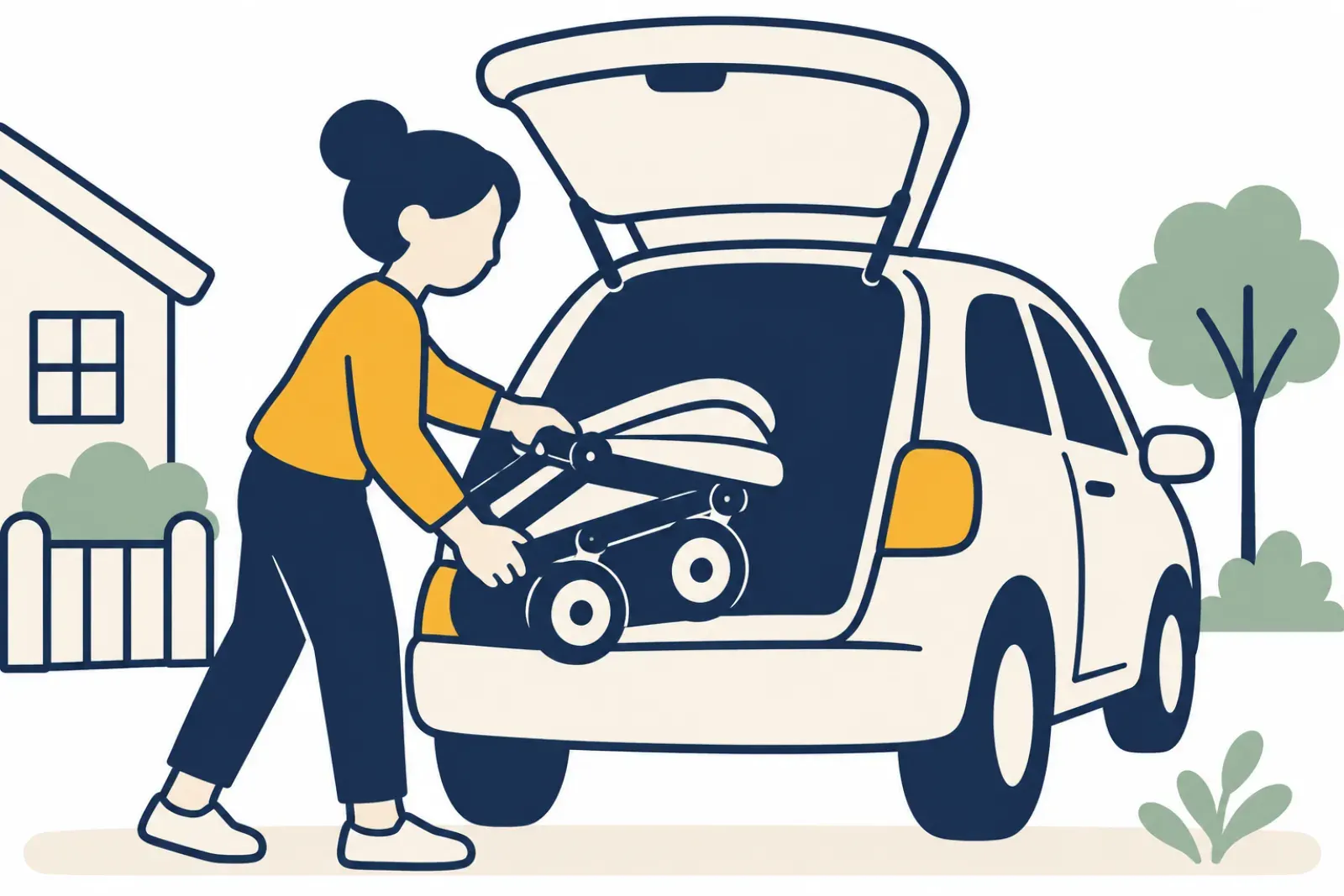
Stairs, trunk and transit set the limits before any feature does. A big full-size stroller with a deep basket pushes beautifully, but even folded it is bulky and awkward on stairs.1 If you live in a walk-up, you will carry whatever you buy, every day, often with a baby on the other arm.
So start with three questions. Is there an elevator or a flight of stairs? Do you drive to where you walk, or roll out of the front door? Will it ride buses and subways?
If you mostly stroll from your door and have an elevator or a garage, a larger, heavier frame costs you little and rides better. If you fold it into a car or haul it up a stoop most days, go compact and accept a slightly lesser push. In a city of narrow shop aisles and crowds, avoid anything notably long or wide.
The takeaway is simple. Write down your stairs, your trunk and your commute before you look at a single stroller.
Start with your front door. How does the stroller get from home to the street?
- Up and down stairs: Go compact and light; you will carry it daily
- Into a car trunk: Check folded size and a weight you can lift alone
- Elevator or straight out: A full-size frame with a big basket rides better
Fold it and lift it before you buy
The fold and the weight matter more than the push on the shop floor, because you will deal with both several times a day for years. Every added feature adds weight, and full-size frames fold large; some need the seat taken off to fit a trunk. At the far end, a stroller or wagon can weigh as much as 58 lb.2
Measure your trunk opening and the spot at home where the stroller will live, then compare both with the folded size. You will not change your car to suit a stroller.
In the store, fold it with a bag on your shoulder, lift it to the height of your trunk lip, and carry it across the shop. On the one-handed fold, opinion splits. It is a real help in a parking lot with a baby on your hip, but it is also marketed harder than it deserves.3
Our take: a quick two-hand fold you can do without thinking beats a one-hand fold that needs a second try. If you cannot lift the stroller comfortably alone, keep looking.
| Model | Weight (lb) |
|---|---|
| gb Pockit+ All City | 12.6 |
| Joolz Aer2 | 14.3 |
| UPPAbaby Minu V3 | 16.7 |
| Cybex Balios S Lux | 25.8 |
| UPPAbaby Cruz V3 | 26.5 |
| Bugaboo Fox 5 | 26.9 |
Plan the newborn months separately
A newborn needs a different setup from a toddler, and not every seat provides it. KidsHealth puts it plainly: newborns need to lie almost flat in a stroller because they cannot hold up their heads.4 That leaves a few routes from day one: a seat that reclines truly flat, a bassinet, or your infant car seat clicked onto the frame.
Check the recline yourself instead of trusting a from-birth label. If the seat lies flat, a bassinet becomes optional, and since it is used for only a short time it is a sensible place to save money. If you walk a lot and have room to store one, it is still a pleasant thing to have.
The car seat route is the easiest for errands, but compatibility is not universal. Pick the car seat first, tell the store which one, and ask which adapters it needs. Choose an adapter that clicks the seat in, not one that straps it on.5
Be wary of boxed bundles, where the stroller or the car seat is often not the one you would choose separately. Decide how the baby rides in the first weeks before you decide anything about the toddler years.
Match the wheels to your sidewalks
Buy wheels for the ground you cover most days, not the trail you might visit once a summer. Large wheels and proper suspension roll over broken pavement, gravel, grass and snow. Small wheels suit smooth sidewalks and store floors, and they are what lets a stroller fold small.
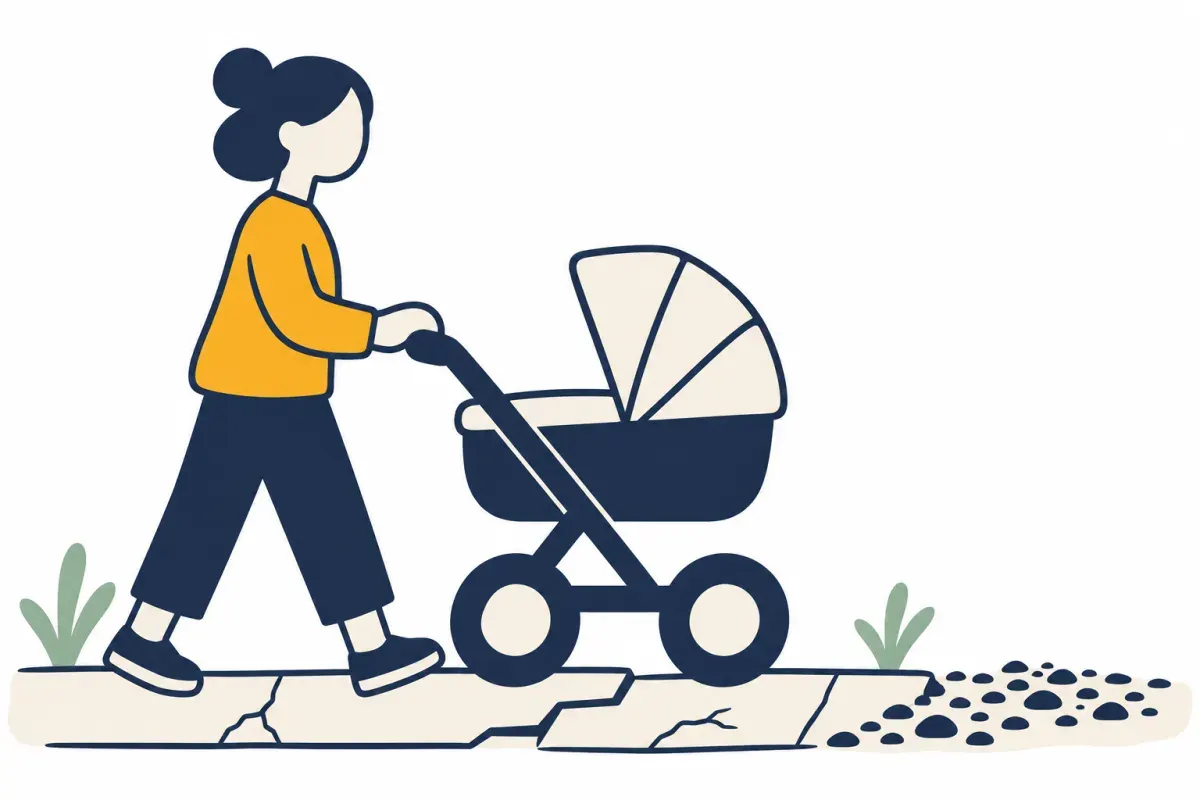
That is the trade. Shrinking the wheels helps a stroller fit a small trunk, but it costs you on rough ground, snow and sand.6 Air-filled tires ride softest but can puncture like a bicycle's, and foam-filled ones are a fair compromise. Hard plastic wheels pass every bump to the baby and to your wrists.
If your routes are sidewalks and parking lots, you do not need an all-terrain machine, and a mid-size or compact frame will do. If you have cobbles, gravel or long winters, a compact travel stroller is the wrong daily choice. A dedicated runner's stroller, like those in our ranking of jogging strollers, earns its bulk only if you already run.
Picture your most common walk and buy for that surface.
Pay for the basket, the canopy and the handlebar
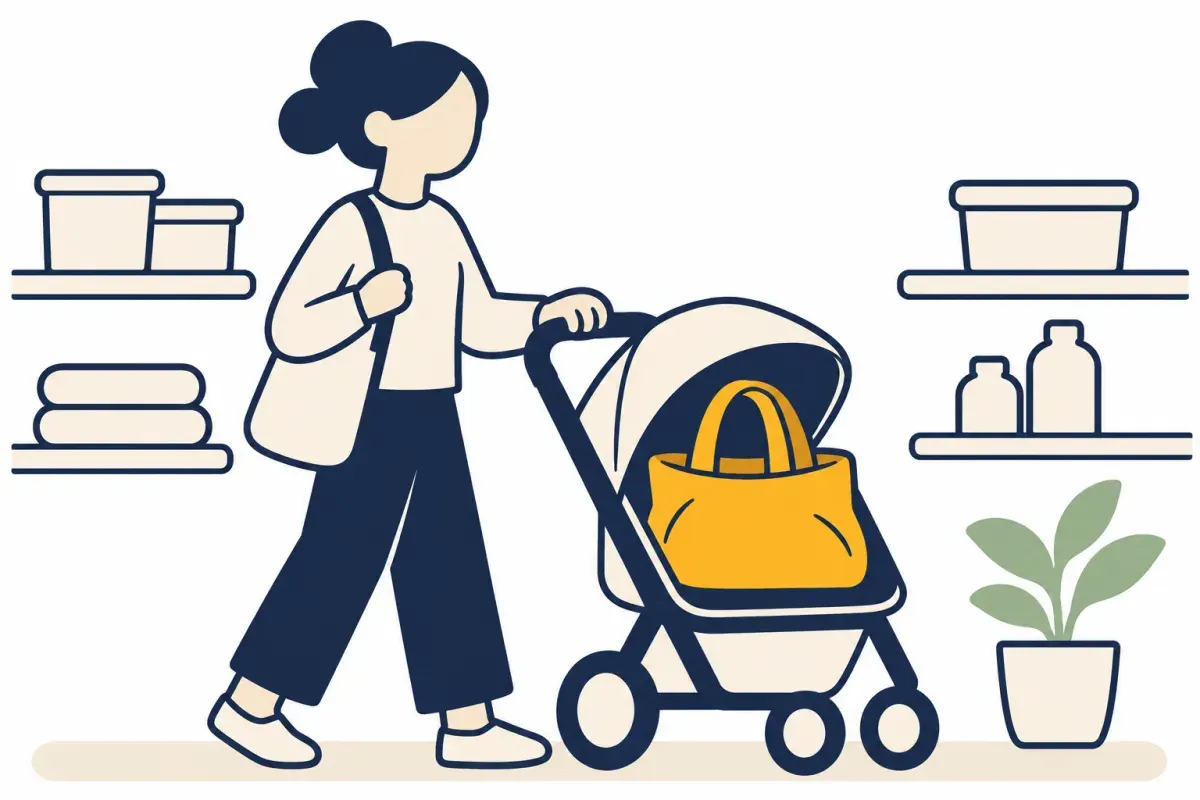
A few features earn their keep every day; most of the rest add bulk. A big basket is the most underrated: a small one means juggling extra bags on every outing for years, so fill it in the store and see what it holds. It matters for another reason, because HealthyChildren.org warns against hanging bags from the handles, where the weight can tip the stroller backward.7
A deep recline and a canopy with generous coverage come next, especially somewhere sunny. Then the handlebar. KidsHealth advises a bar that sits at your waist or a little below, so if two adults of different heights will push, both should try it.8
A telescoping bar leaves tall walkers more room for their stride than a pivoting one, and most travel strollers have a fixed bar. Treat trays and cup holders as extras; trays in particular make the fold bulkier. A seat that turns to face you is lovely early on, but it usually means a bigger fold and a higher price.
Basket, recline, canopy, handlebar, in that order. Let the rest go.
What to do next
Buy one good everyday stroller for the life you have now, and wait on the rest. A second, lighter stroller for flights makes sense for many families, but you will not know how often you travel until you are living it. Our ranking of travel strollers will still be there.
The same goes for doubles. If a second child is likely within a couple of years, a frame that accepts a second seat is worth a look, but do not push a full double around for one baby.
Opinion does split on where to begin. One school starts small, with a light frame that carries the car seat, and buys the big stroller once routines are clear. That suits you if you drive everywhere and money is tight at the start. If you walk daily from your front door, buy the proper stroller first.
On price, set a budget and hold to it, but choose a simpler type from an established maker over an unknown brand's bargain. Then go to a store, because an empty stroller on a polished floor tells you little. Put about 25 lb in the seat and steer with one hand.9 Build your shortlist from our ranking of full-size strollers, and run these tests on each one.
- Fold it with a bag on your shoulder
- Lift it to trunk height and carry it
- Load the seat and steer with one hand
- Fill the basket with your own bag
- Have every adult who will push try the handlebar
“there is no perfect stroller, right? There is not a stroller that you are going to be able to check every box on.”
That wall of strollers looks different once you know your stairs, your trunk and your most common walk. Most of what is on it rules itself out, and the few that remain are the ones worth folding, lifting and loading in the store. You still have not met the person who will ride in it, but you know the life they are arriving into, and that is enough to choose well.
Reviews and rankings
- 1Bambi Baby Store · 1:34 “that doesn't fit every single family cuz it's big and bulky. Even though it does fold, it is a little harder to go up and downstairs with it”
- 2Safe in the Seat “You should also consider the weight and having to load and unload the stroller or wagon on your own. Some strollers and wagons are as heavy as 58 lbs!”
- 3BabyGearLab “While it is convenient to be able to fold your stroller with one hand, we think manufacturers make a bigger deal of the feature in their marketing than it deserves.”
- 4kidshealth.org “Newborns need to be able to lie almost flat in strollers, since they can't hold up their heads.”
- 5BabyGearLab “make sure you get a car seat adapter or frame stroller that provides a click-in method of securing your specific model of car seat rather than a strap-in”
- 6The Stroller Workshop · 6:00 “unfortunately though the size of the wheels really impacts the stroller's performance as well in particular how it handles terrain and snow and sand”
- 7HealthyChildren.org “Don't hang bags or other items from the handles of your baby's stroller—they can make it tip backward. If the stroller has a basket for carrying things, be sure it is placed low and near the rear wheels.”
- 8kidshealth.org “The handlebars should be at your waist level or slightly lower.”
- 9BabyGearLab “we recommend that you put 25 lbs of weight in the seat, simulating an average 1.5-year-old and a diaper bag; now try to maneuver it with one hand”