How to choose a tandem stroller
What a tandem's slim frame costs you in seat room, fold and push, and how to check before you buy.
By the StrollHQ editors · 6 min read · Published Nov 13, 2026
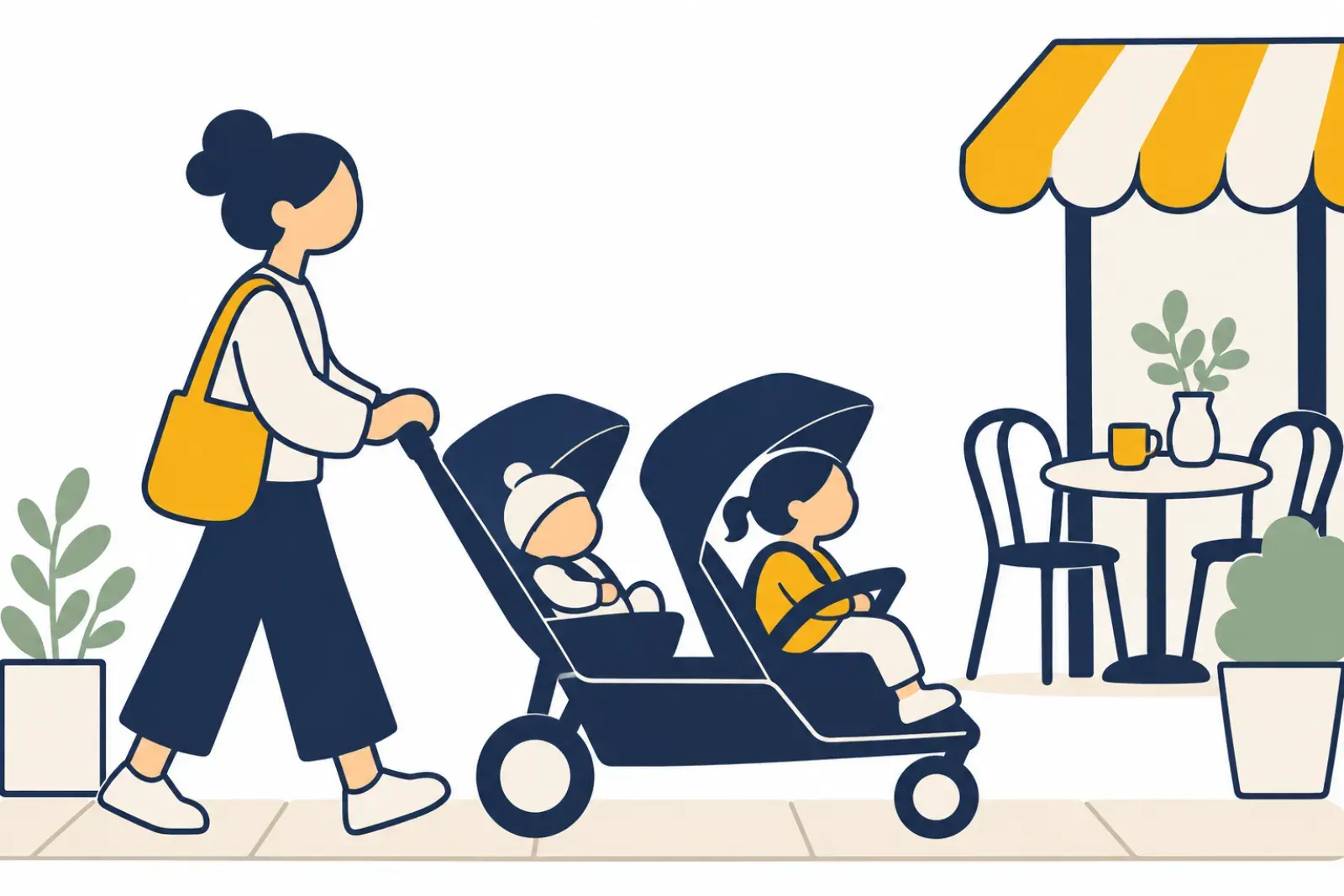
You have a toddler who still rides and a baby on the way, or twins due in spring, and a front door that is exactly one stroller wide. That is the case for a tandem: two seats in a line, one behind the other, on a frame about as narrow as a single.
The catch is everything that follows from putting two children on one long frame. Choose on the second seat and the fold first, because that is where tandems differ most and where the regrets come from. Wheels, fabrics and cup holders can wait.
A tandem trades width for length
A tandem solves doorways and creates a steering problem. Because the children sit one behind the other, the frame stays as slim as a single's, so shop aisles, bus doors and narrow hallways stop being a puzzle. Measure your tightest doorway at home anyway and compare it with the listed width.
Length is the price. A long, heavy frame is harder to swing round a corner and awkward when you have to hold a door open and push through it at once. Expect more effort than a single asks for; with a tandem, a hard push is the rule and not the exception.1
Where the weight sits matters as much as how much there is. A heavy child in the front seat makes the whole stroller harder to push. Designs that add the second seat at the back, close to you, keep more of their easy steering in two-child mode than ones that hang it out front.2
If your days are narrow pavements and shop doors, the slim frame wins. If you mostly walk wide suburban paths, a side-by-side pushes more easily as the children grow, and you should try one before committing. In the store, load both seats and turn a full circle one-handed.
Check the second seat before anything else
The second seat is where tandems cut corners. On many, it is smaller than the main seat and rated for less weight, so the child you planned to put there may outgrow it long before the stroller wears out.3 Look up the limit for each seat separately; never assume the headline figure covers both.
Then look at room. A low seat tucked under the main one can leave an older toddler with almost nowhere to put their legs, and a short backrest under a low canopy runs out of headroom early. Sit your bigger child in each seat in the store, canopy down, and look at knees and head.
Two equal seats are the thing to pay for. They let either child sit in either place, which matters most for twins and for siblings close in age. With a wide age gap a smaller second seat can be fine, as long as the smaller child is the one in it. If both children could ever weigh the same, buy equal seats.
“watching my older toddler get crammed into that bottom spot with virtually no leg room genuinely made me feel a bit guilty”
Newborns and twins narrow the field
A baby under six months changes which tandems you can buy at all. The options are a bassinet, an infant car seat on adapters, or a seat that reclines far enough, and how far is enough is where the advice splits.
CHOICE draws the line at a backrest that reclines more than 130°.4 Stricter voices want a seat that lies completely flat. A bassinet sidesteps the argument, and it has the most agreement behind it.
Then check where the baby goes. In double mode, some tandems accept a bassinet or car seat only in the lower position.5 If you want the baby up high and facing you while the toddler rides below, confirm that layout exists before you pay. Check the maker's minimum age for each seat while you are there.
Twins are the hard case. Plenty of doubles take one newborn; far fewer take two at once. You need two bassinets, two car seats or two from-birth seats on the frame together, with enough space between them to reach the lower baby. For twins, see the exact two-infant setup assembled before you buy.
Start with who rides. Who will ride in the tandem?
- A baby and a toddler: Check where the bassinet goes in double mode
- Twins from birth: Two bassinets or two car seats on the frame at once
- Two toddlers: Equal seats with matching weight limits and real legroom
Fold it yourself, with both seats on
The fold decides whether you still like this stroller in month six. A tandem that collapses in one piece with both seats attached goes into the trunk in one move. Many do not: they fold whole only with one forward-facing seat, and ask you to pull off the second seat, a reversed seat or a bassinet first.6 That means a seat on the driveway and a baby on your hip, every trip.
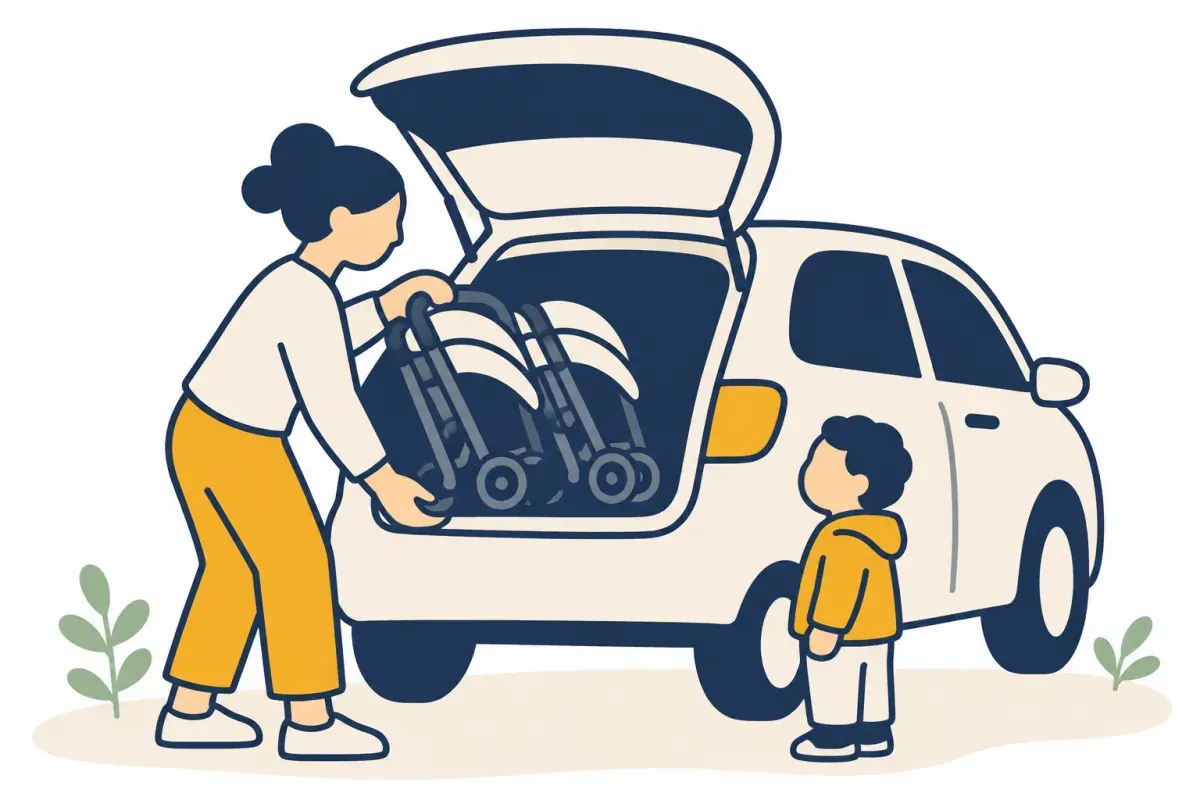
Do it yourself in the store instead of watching a salesperson's practised hands. Fold it in the layout you will use most, then lift it to the height of your trunk lip. Doubles are heavy and stay bulky when folded, so the lift is as much a test as the latch.
Measure the trunk before you go, and take the tape with you. The folded stroller should fit without the wheels coming off.7 If you live up a flight of stairs or rely on buses, weight and folded size move to the top of your list, above ride quality.
- Fold it with both seats attached, in the layout you will use
- Lift the folded frame to trunk height, twice
- Seat your older child in the second seat with the canopy down
- Fit your own diaper bag in the basket in two-child mode
- Push it one-handed through the shop door
“imagine yourself doing this multiple times a day over multiple weeks and multiple months and figure out what fold really works for you”
Double mode costs you basket, recline and sight lines
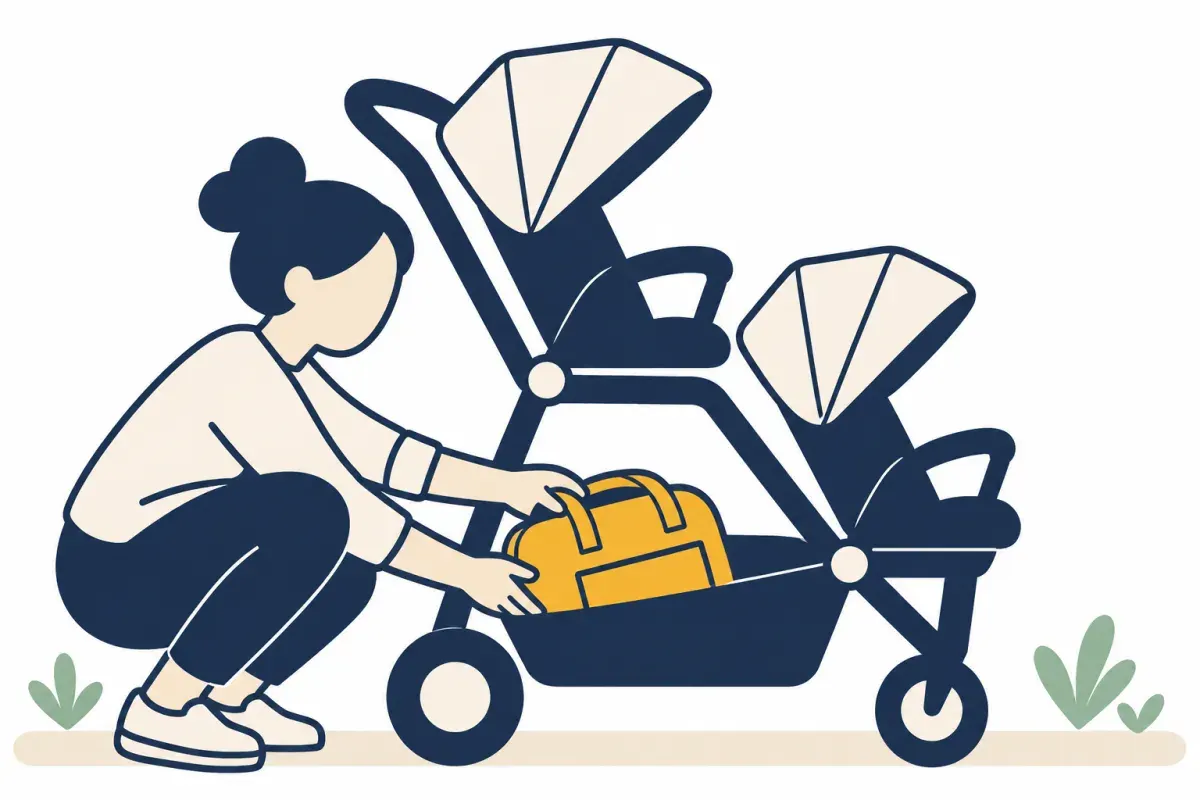
A tandem with two seats on is a different stroller from the one you saw with one. The basket goes first: a low second seat can block the opening, and tandems as a type tend to have smaller baskets than other doubles.8 Capacity figures tell you little. What counts is whether you can get a diaper bag in and out with both seats fitted.
Recline and seat direction get tighter too. How far each seat tips back depends on how the two are arranged, so the generous recline you saw in single mode may not survive the second seat.9 The front child is also harder to see from the handlebar. If one child still naps on the move, set up the nap layout in the store and recline that seat fully.
Reversible seats are useful, but they usually come with a bigger fold and a higher price. Decide whether you would turn the seats often enough to carry that.
What to do next
Start with who rides today. If you have one child and a second is a maybe, a full double now means paying for and hauling bulk you may not need; a convertible bought as a single keeps the door open. If the second child is already here, buy for this stage and not for a family plan that may change.
Check the extras before the price. Car seat adapters, a second seat and a riding board for an older sibling are often sold separately, and some boards need their own adapter.10 Tell the store which infant car seat you own, because not every seat fits every frame.
Budget tandems cost far less and give up push quality and finish; the expensive ones earn some of it back in years of use and resale. Compare warranties, which vary a lot between makers. And keep your light single for the days with one child. Then shortlist two frames from our ranking of double strollers, and take both children and a tape measure to the store.
That one-stroller-wide front door is a good reason to buy a tandem, and now you know what the slim frame asks in return. Put both children in the seats, fold it with your own hands and lift it once before you decide. If it passes in the store, it will pass on a wet Tuesday with a baby on your hip.
Reviews and rankings
- 1The Bump “a challenging push tends to be the rule, not the exception, with a tandem—it's to be expected when you have a stroller that’s longer and heavier than your average single-seat counterpart”
- 2The Stroller Workshop · 1:05 “as a rear loading tandem the Demi next retains its ease of maneuverability and good terrain capability which is not the case with front loading tandems due to the added frontal weight”
- 3The Stroller Mom · 3:24 “not only are the front seats smaller, they also don't hold the same amount of weight as the seats in the rear.”
- 4CHOICE “Babies under six months shouldn’t be placed in a stroller seat unless the backrest can be reclined more than 130°.”
- 5The Bump “pay close attention to the available configurations—some models only allow a bassinet or infant car seat in the lower position when used as a double”
- 6The Stroller Workshop · 1:33 “only folds down as a single piece with the seat facing forwards not when reversed with a bassinet attached or in its tandem configurations”
- 7CHOICE “Measure the stroller before you buy it to make sure it fits into your car boot without needing the wheels removed.”
- 8CHOICE “we’ve seen some models where basket size may be impacted if your double stroller is a tandem style”
- 9The Baby Gear Guy · 9:27 “there's like sort of less flexibility in terms of reclining depending on the orientation when it comes to these strollers”
- 10bugaboo.com “Some strollers require an extra adapter for this connection, so make sure to check before you buy.”