Travel systems, explained
What a travel system is, whether you need one, and how to pair a stroller with an infant car seat.
By the StrollHQ editors · 6 min read · Published Nov 12, 2026
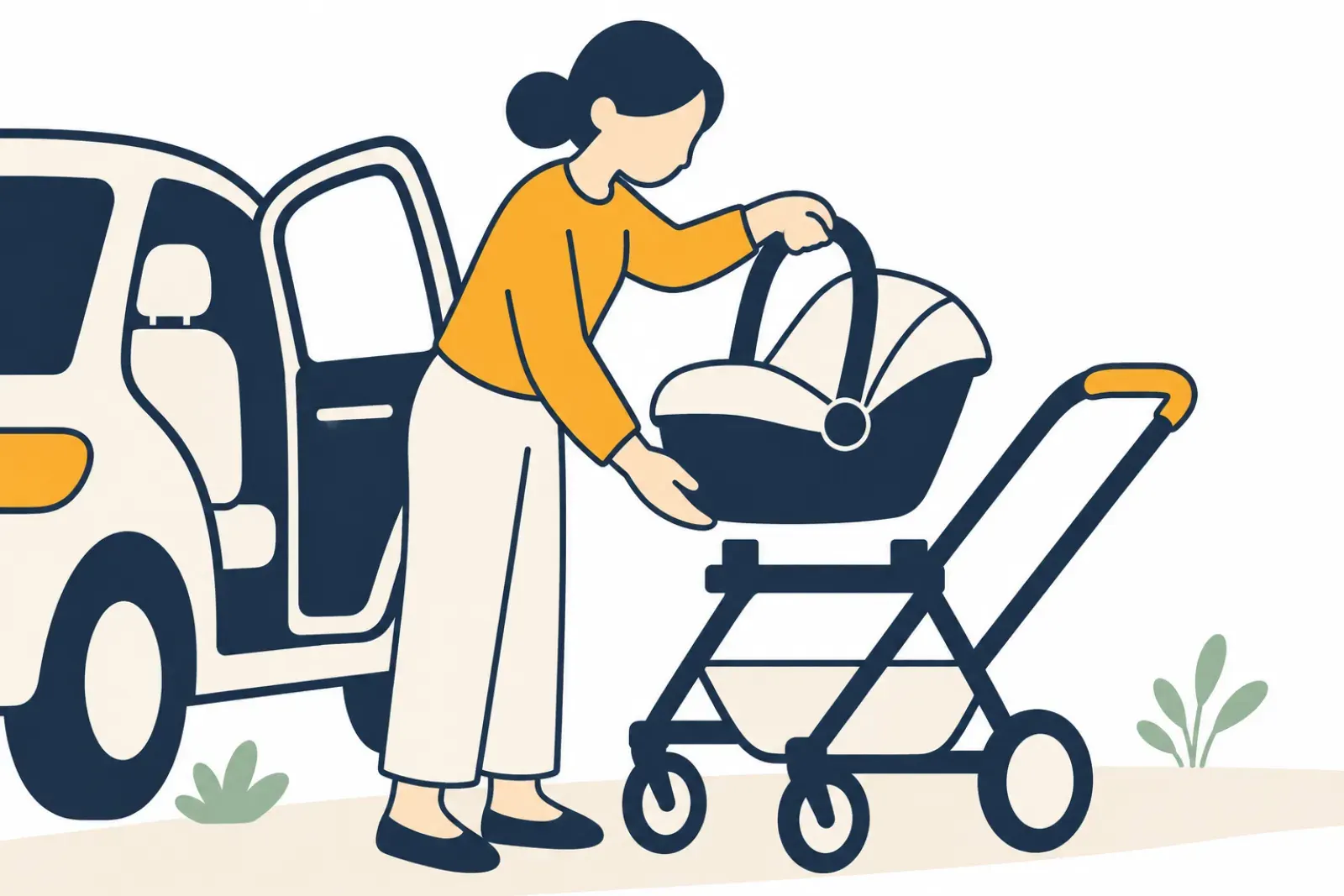
A travel system is a stroller and an infant car seat that click together. You lift the seat out of the car, baby still in it, and drop it onto the stroller frame. Some are sold as one box from one maker. Others you assemble yourself from a stroller, a seat and a pair of adapters.
If you drive most days and you're expecting your first, it's probably what you're shopping for, whether or not the box says so. The short answer: pick the stroller you want to push for the next few years, then find an infant seat that fits it. The stroller is the part you'll live with.
Choose the stroller first
The stroller should lead the decision, because it's the piece you'll use longest. The infant seat is with you for about a year. The stroller carries on well into the toddler years, over your sidewalks, into your trunk and through your front door. So judge it as a stroller before you think about what clicks onto it.
That means being honest about how you live. If you walk everywhere over broken pavement, you want bigger wheels, suspension and a solid frame, and you accept the weight. If most of your trips start with loading the trunk, a lighter frame with an easy fold matters more. One stroller rarely does both well.
Matched bundles are tempting, and the parts are certain to fit. The catch is lock-in: a bundle's car seat may fit few other strollers, so if you end up disliking the stroller, your replacements are limited.1 Mixing brands is easier than it sounds, since almost every stroller accepts some infant seat.2 Buy a bundle only if you'd choose that stroller anyway.
An infant seat is a convenience, and usually worth it
This is where opinion splits, because you don't have to buy an infant seat. A convertible seat can be used from birth and stays in the car for years, which saves you buying a seat your baby outgrows in about a year.3 If money is tight and you rarely leave the car with a sleeping baby, that's a sound plan. It also means no travel system, so the stroller has to handle a newborn by itself.
What the infant seat buys is the click. A baby who falls asleep on the drive stays asleep while you move the seat onto the stroller or into the house. With a convertible seat you unbuckle and lift every time. In the first months, you feel that difference daily.
Our take: if you drive daily, buy the infant seat. If you use taxis or fly often, it earns its place twice, because many infant seats can be belted into a car without their base.4 With a second car, an extra base costs far less than an extra seat. If you mostly walk from your front door, skip it and put the money into the stroller.
Do you need an infant seat?. How do you get around most days?
- Mostly by car: Infant seat that clicks on, lighter frame, easy fold
- Mostly on foot: Skip the infant seat; sturdy frame with a newborn-ready seat
- Taxis and flights: Infant seat that installs without its base, compact frame
Plan the newborn months separately
The car seat on the frame is for errands, and the stroller still needs its own answer for a newborn. A quick shop or a coffee stop is what the click-on seat does well. For long walks and longer outings, you want the baby in something built for strolling: a seat with a newborn-ready recline, a pramette or a bassinet.

Don't assume the stroller's regular seat will do. Some are designed for six months and up, and need a newborn kit or a car seat before then.5 Ask what the seat does straight out of the box, and check the manual for the limits of whichever newborn setup you choose.
On bassinets, the advice divides. A bassinet gives a newborn more room and better weather cover. It also costs more, needs storing, and has to come off before the stroller folds.
Treat it as a luxury you can do without.6 If you walk for hours, get one. If you drive to most places, a lie-flat seat or pramette does the job with less to carry.
Check the weight, the fold and your trunk
Travel systems tend to be bulky, so test the lifting and folding before you pay. Two weights matter. One is the stroller, which you'll hoist into the trunk several times a day. The other is the car seat, which you'll carry on one arm with a growing baby inside; the listed weight is the empty seat.7
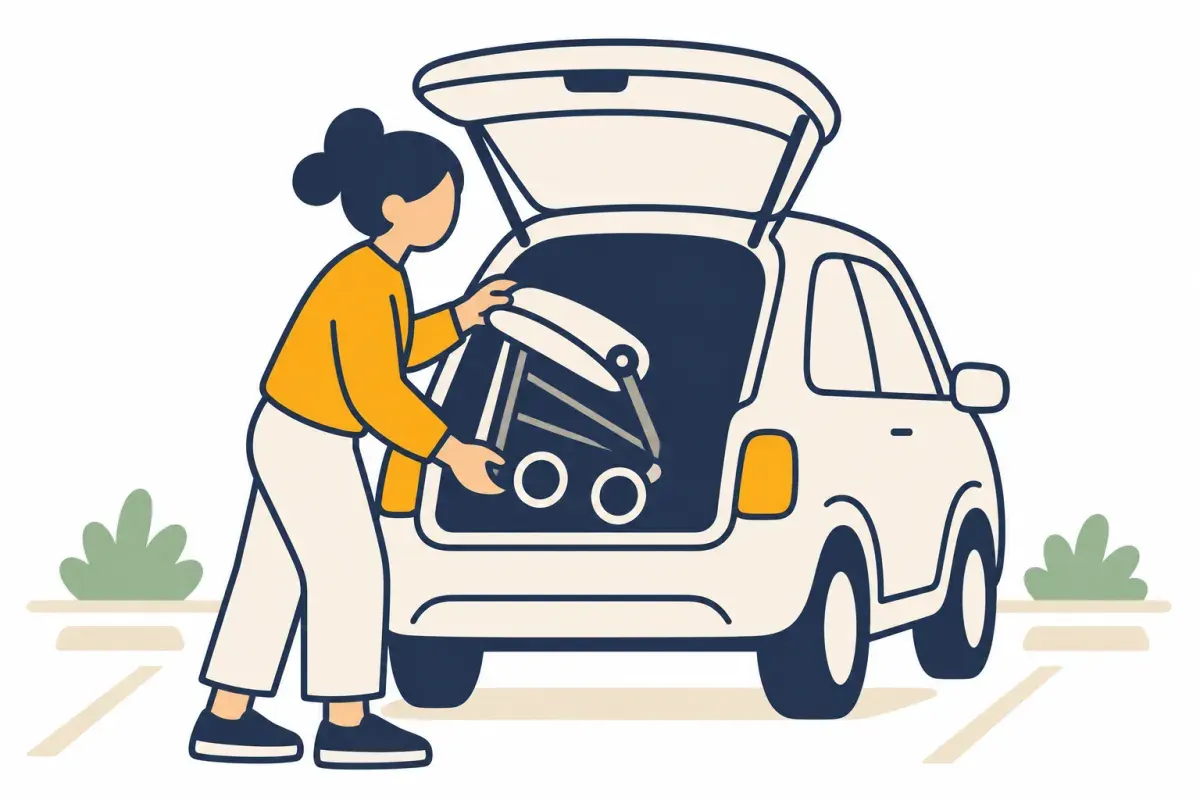
Run the tests below in the store, or at home while you can still return it. Then practise the fold again before the baby arrives. It always looks easier when a salesperson does it. If any of these feels like a struggle on a calm afternoon, it will be worse in a wet parking lot.
- Fold the stroller with a bag on one shoulder, then open it again.
- Lift the folded stroller to the height of your trunk's lip.
- Measure your trunk and compare it with the folded size.
- Click the car seat on and off the frame a few times.
- Carry the car seat across the store on one arm.
- Measure your front doorway against the stroller's width.
“check that the thing actually fits in the boot of your car and through your doorway you'll be so surprised at just how many people actually forget this”
Count what's in the box
The sticker price of a travel system is rarely the full price. Adapters, a car seat base, a rain cover, a footmuff, a bassinet: each may be included or each may be an extra, and they add up quickly.8 Compare what each package actually contains, and make sure the base in the box is the one for your seat.
Don't let a small freebie decide a big purchase. A rain cover costs little when bought separately, so it shouldn't tip you toward the wrong stroller. Adapters matter more: some strollers have them built in, others sell them separately, and mixing brands often means buying a set. A secondhand or open-box stroller is a fair way to save, though it usually comes without a warranty.
One caution on accessories comes from HealthyChildren.org: anything that didn't come with the car seat has not been crash tested with it, and stroller accessories such as sleeping bag inserts should never be used in the car seat.9 So price the car seat as it comes, and spend your accessory money on the stroller.
Before you pay
- Are adapters included?: Built in, in the box, or sold separately
- Is the car seat base included?: And is it the base made for your seat
- What covers the newborn months?: Flat recline, pramette, bassinet, or an extra kit
- Which extras cost more?: Rain cover, footmuff and bassinet add up
- How long is the warranty?: Secondhand usually has none
What to do next
Start with your week. Write down where the stroller will go most: sidewalks, the trunk, stairs, public transit. That tells you which kind of stroller to shop, and our ranking of full-size strollers is the place to begin if you want one frame from birth through the toddler years.
Then decide on the infant seat, check which seats fit your shortlisted stroller and whether adapters are needed, and settle the newborn setup. Last, do the trunk and fold tests with the exact pairing you plan to buy.
If you walk rough ground and also drive daily, consider two strollers instead of one compromise: a sturdy main one, plus one of the travel strollers for the car. And buy for the next year or so of your life. If a second child or a move changes things, a good stroller resells well, and you can trade up then.
A travel system is only a stroller and an infant seat that click together, and you now know which half to choose first. Pick the stroller that suits your week, find the seat that fits it, and try the fold and the lift yourself before you pay. Do that, and the first time you carry a sleeping baby from the car to the sidewalk, the click will feel like the easy part.
Reviews and rankings
- 1The Stroller Workshop · 3:33 “if you wind up not liking the stroller you'll have a limited selection of what to replace it with since you're locked in by the car seat you bought it with”
- 2Destination Baby & Kids · 1:37 “almost all strollers will accept some type of infant car seat. So, you don't have to get necessarily brand with brand.”
- 3Libby Flanagan · 0:49 “you don't actually need one of these and I'm going to tell you why this car seat is a convenience they can only use this type of infant bucket seat for like a year”
- 4Kevin Lu · 3:35 “many of the infant car seats actually doesn't require base to attach the car the base just makes life easier”
- 5Hype Tech · 9:47 “the stroller is designed for babies and kids ages 6 months and up but if you want to use it for your infant you can purchase”
- 6The Stroller Workshop · 1:53 “a bassinet is a luxury Choice here great if it's useful for you or if you just really want one of course but it does add bulk and cost and is by no means a necessity”
- 7Mother & Baby “it's worth checking the weight before you buy, as you can get lightweight or heavyweight options. Remember, the weight is without your baby inside”
- 8Mumsnet · 1:30 “the extras can add up in a big way frame car see kotti adapters rain cover foot muffs parasols the list goes on so definitely check what's in the package before splashing out”
- 9HealthyChildren.org “if the item did not come with the car seat, it has not been crash tested and may interfere with the protection provided in a crash. Never use sleeping bag inserts or other stroller accessories in the car seat.”